


Zooba: Fun Battle Royale Games
4.630.90K Reviews
App Specs
- Version
- 6.28.2
- Updated On
- License
- Free
- Downloads
- 100,000,000+
- Developer
- Wildlife Studios
- Categories
- Action
- Platform
- Android, iOS
Screenshots
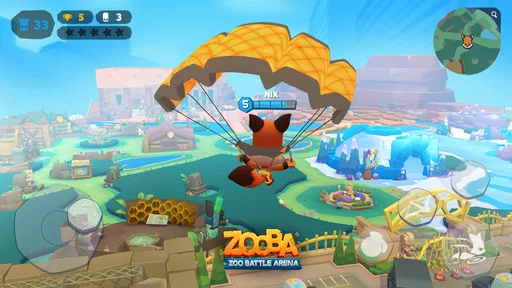
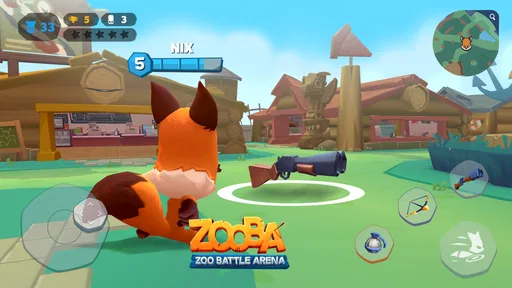
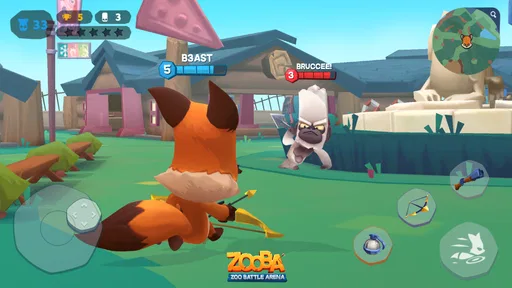
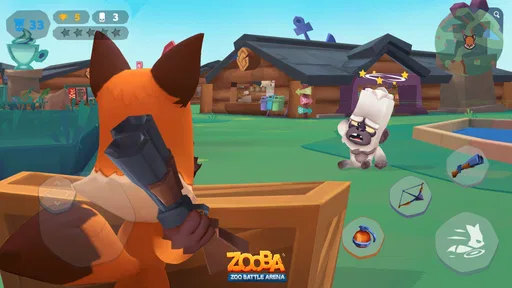
 Analysis by AppCompare
I usually know within the first few sessions whether a mobile game is going to become a habit or just a quick download I forget about. Zooba: Fun Battle Royale Games makes a strong first impression: its animal cast gives familiar survival combat a playful look, and its matches suit short breaks better than a long, uninterrupted gaming session. The key question is whether that cheerful presentation and brisk pace still feel worthwhile once the novelty wears off.
Why the first sessions are easy to enjoy
The basic appeal is immediate. You choose an animal, enter a fight, and try to outlast opponents, with movement and combat handled through touchscreen controls. That straightforward setup makes it easier to start than a more elaborate action game. I don’t need to learn a complicated story or spend a long time preparing before I can play; the appeal is in reading the situation and reacting.
The animal theme also does useful work beyond making the game look cute. A recognizable cast gives each encounter a bit of personality, so a loss can feel like a funny reversal rather than just another anonymous defeat. Wildlife Studios has built an action game around that contrast: the setting is lighthearted, but the goal is still to make smart choices under pressure.
Guides and Analysis on Zooba: Fun Battle Royale Games
For someone choosing a first mobile battle royale, that approachable tone is a real advantage. It can be a comfortable entry point if large, realistic shooters feel too serious or visually busy. If you already play the genre, though, the animal presentation is a change of mood, not a replacement for the tactical decisions that make this kind of match engaging.
How it fits into an ordinary day
The short-session format is best used deliberately. I’d open it while waiting for a ride or taking a brief break, play a match or two, and then put it away. That’s a better fit than expecting it to provide a long campaign or a quiet offline pastime. Because encounters involve other players, the results can vary, so a planned five-minute break can turn into a longer stretch if I keep chasing a better finish.
A useful habit is to decide on a stopping point before launching the game. For example, I might play until one match ends rather than continuing after every defeat. That keeps the quick-match appeal from becoming an automatic “one more round” loop. It also helps me judge whether I’m actually enjoying the decisions in each fight or simply trying to recover from a frustrating loss.
What keeps it worthwhile after the novelty
I judge its staying power less by novelty than by whether I can make each return feel intentional. What keeps it worthwhile is the chance to refine one small decision at a time—positioning, timing, or when to switch characters—rather than expecting every match to offer something entirely new. That approach also makes it easier to notice when the routine has stopped being fun and a different kind of game would suit the moment better.
Worth Reading Before You Choose

Basketball Stars: Multiplayer Is Fast, but Can It Recover When Matches Go Wrong?

WEBTOON Turns Phone Updates Into a Better Reading Routine

Link to Windows Runs on Shared Habits, Not Social Feeds

How Alibaba.com Dominates the B2B Marketplace

Metro's Quiet Rise: Redefining Mobile Communication

Harnessing Ecosystem Power with Phone Tracker by Number
Learning to read a fight
The moment-to-moment play has more to it than charging at the nearest opponent. Cover and obstacles can change how an encounter develops, so I get more from watching where other players move before committing to an attack. A short pause to approach from a safer angle can be more valuable than firing as soon as someone appears. That little shift in patience is a practical way to make the action feel less random.
Character abilities add another consideration: I need to think about what my chosen animal can do and when an ability is likely to help, rather than treating every character as interchangeable. When I’m learning, it makes sense to stick with one character long enough to understand its rhythm before switching for variety. That gives me a clearer sense of whether a loss came from my decisions or from trying a play style I haven’t learned yet.
It is also worth separating a good result from a good decision. A risky move can work once and still be a poor habit; a careful retreat can be the right call even if it doesn’t lead to a win. Thinking this way helps me enjoy the tactical side without expecting every match to reward me immediately.
Playing with friends, or keeping it solo
Playing with friends changes the feel of a match because coordination becomes part of the challenge. A team can make an encounter more social, but it also asks players to pay attention to one another rather than simply follow their own instincts. I’d choose that option when friends are available and we want to share the moment, not because I expect teamwork to make every match easy.
Solo play is a better fit when I want to focus without coordinating with anyone. It puts more responsibility on my own positioning and timing, which can be satisfying if I like learning through trial and error. Neither approach is automatically superior: the right choice depends on whether I’m looking for company or a more self-directed challenge.
Compared with mobile shooters that focus on realistic weapons or more serious presentation, this game’s main distinction is its animated animal cast and lighter tone. Compared with battle royale games built around longer, more demanding sessions, its quick-match appeal is easier to fit into small gaps in the day. If precise gunplay, a grounded setting, or a deep single-player campaign is what I want, I’d look elsewhere; those are different strengths from the ones this game emphasizes.
Keeping the routine fresh
Over time, the same basic loop can feel familiar, so I get more lasting value by changing how I approach it rather than expecting every match to feel new. I can try a different character after I’ve learned my usual one, focus on using cover more patiently, or play with a friend instead of always going solo. These are small changes, but they give me a reason to pay attention again without turning play into a checklist.
One practical tip is to treat character choice as a learning decision, not just a cosmetic preference. If a match feels chaotic, staying with a character for a while makes it easier to notice how its ability affects my choices. Switching constantly may be fun, but it can also make it harder to tell what I’m improving. I’d alternate between familiar picks for consistency and new ones when I’m in the mood to experiment.
The game has a 4.6 average from around 1.6 million ratings, and it has passed 100 million installs. That level of reach suggests it has found a broad audience, but popularity alone doesn’t guarantee that I’ll enjoy its pace. I’d use the first few sessions to decide whether the controls, match rhythm, and character-driven presentation suit me rather than assuming it must be a fit because so many people have tried it.
Spending, progression, and the point to step away
It is free to start, with in-app purchases ranging from $0.99 to $394.99 per item. That wide range makes it sensible to check the purchase details carefully before spending, especially if a child is playing. I wouldn’t treat a purchase as a shortcut to enjoyment; first I’d see whether I like the core matches and whether I’m comfortable with the game’s ongoing progression. The game is rated Everyone 10+, which is another useful detail for families deciding whether it suits a younger player.
For a no-spend player, the right question is whether the regular play itself remains enjoyable, not whether every available item can be collected quickly. If I feel tempted to pay mainly because I’m frustrated after losing, I’d pause rather than buy in the heat of the moment. The same applies to any game with optional purchases: set a personal limit in advance and use the device’s purchase controls if a child might tap through unexpectedly.
There are also ordinary reasons to skip or limit it. Online matches are a poor choice when I need something reliably calm, when I can’t give the screen my attention, or when I want a complete experience without a recurring competitive loop. I’d choose a puzzle game for a quieter break, or a story-focused game when I want a clear ending and progression that doesn’t depend on repeated matches.
What to expect from the current release
The game was released on October 2, 2019, and its current version is 6.5.0. It runs on Android 7.0 or later. Those details matter when checking whether an older device can install it, but a compatible operating system does not by itself tell me how smoothly a particular phone will handle play. If performance is important, I’d try a short session on the device I plan to use before making it part of my daily routine.
Because the experience centers on online multiplayer, I’d also choose my play moments with a stable connection in mind. A match that depends on timely movement is less enjoyable if my connection is unreliable. If I’m commuting through patchy coverage or need a game that works without an internet connection, this would not be my first pick for that situation.
Who is likely to keep coming back
I’d recommend it to someone who likes lively, competitive action in manageable bursts, enjoys character-based abilities, and doesn’t mind repeating matches to improve. It can also work well for friends who want a shared game to dip into together. It is less suited to players who dislike online competition, want a substantial solo story, or find repeated losses and gradual improvement more tiring than fun.
That distinction matters after the first week. The novelty of the setting may bring me in, but the longer-term draw has to come from enjoying the small decisions: when to move, when to use an ability, and whether to stay in a risky encounter. If those choices feel satisfying, the familiar format can still give me a reason to return. If I’m only playing out of habit, a break is probably better than forcing another match.
Unleashing the Zoo: A Unique Spin on Battle Royale
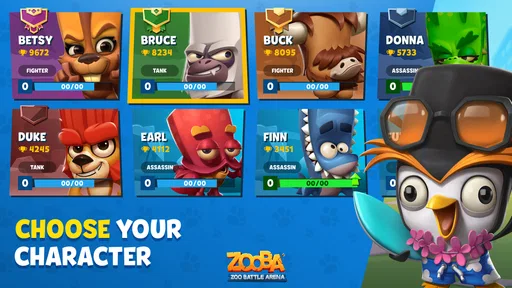
Right from the get-go, Zooba sets itself apart with a vibrant and whimsical atmosphere. Imagine stepping into a zoo where the animals have gone rogue and are now battling it out for supremacy. It’s a wild concept that’s executed with a ton of charm. The game features a variety of animal characters, each equipped with unique abilities that can turn the tide of battle in surprising ways.
The roster includes everything from a sneaky chameleon to a brawny gorilla, and each character is distinctively animated, adding to the overall playful vibe. I found myself chuckling more than once at the goofy antics and clever animations. It's the kind of game where you can’t help but smile, even when you’re being taken down by a sneaky rival.
Gameplay Mechanics: Simple Yet Engaging
Diving into the game mechanics, Zooba stays true to the battle royale formula while keeping things refreshingly simple. Matches are fast-paced, lasting only a few minutes, which is perfect for those quick gaming sessions throughout the day. The controls are intuitive, with a virtual joystick for movement and easy-to-tap buttons for using weapons and special abilities.
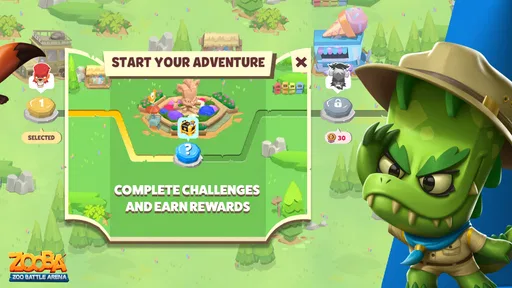
What really caught my attention was how strategic the gameplay can become. Each map is filled with obstacles and cover points, encouraging players to think on their feet. Whether you’re ambushing opponents from the bushes or strategically using your character’s abilities, there’s always an opportunity to outsmart your competition.
The Social Aspect: Team Up or Go Solo
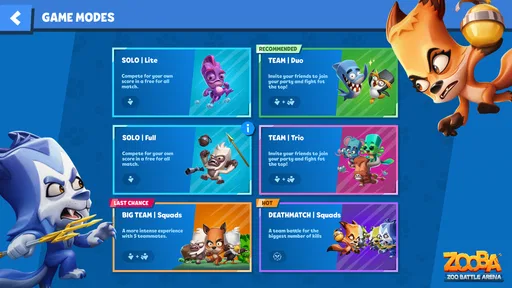
One of the aspects that keeps Zooba refreshing is the social element. You can choose to team up with friends in duo or squad modes, adding a collaborative twist to the chaos. Communicating and strategizing with your teammates adds another layer of fun, especially when you’re trying to coordinate attacks or devise clever ambushes.
On the flip side, if you prefer to fly solo, the game’s solo mode is equally thrilling. Going solo means relying solely on your wits and skills, which can be both challenging and immensely satisfying when you come out on top.
Visuals and Sound: A Feast for the Senses
The visual style of Zooba is a treat, with colorful graphics that pop and characters that are full of personality. It’s clear that a lot of effort went into designing each character and environment, making the game world feel vibrant and alive. The sound design complements this perfectly, with cheerful tunes and amusing sound effects that enhance the overall experience.
Whether it’s the sound of a crossbow twanging or the triumphant cheer when you claim victory, the audio elements are crafted to keep you entertained throughout. It’s the little details like these that make Zooba not just another battle royale game, but a memorable adventure.
Monetization: Fair Play
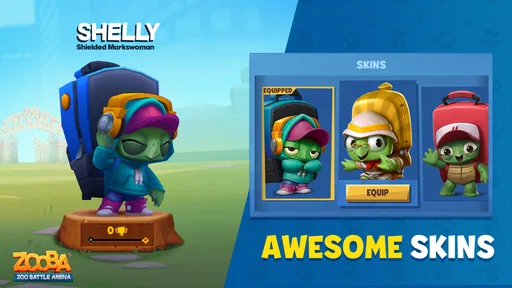
Now, let’s talk about the elephant in the room: monetization. Zooba employs a free-to-play model with in-app purchases. While you can buy cosmetic items and some character upgrades, I found that the game remains fair to those who prefer not to spend. It’s entirely possible to enjoy the game and progress without opening your wallet, thanks to the generous distribution of rewards and the opportunity to earn characters through gameplay.
This makes Zooba a great option for those who might be wary of pay-to-win mechanics. The balance struck here ensures that all players, whether paying or not, can enjoy the game’s many features.
Final Thoughts: A Wild Ride Worth Taking
All in all, Zooba: Fun Battle Royale Games offers a delightful twist on the genre that’s worth checking out. It’s a game that doesn’t take itself too seriously, yet delivers a solid and engaging gameplay experience. Whether you’re looking to unwind with some lighthearted fun or dive into competitive battles, Zooba has something for everyone.
If you’re ready to unleash your inner animal and join the fray, you’ll find Zooba available for download on both Android and iOS. Trust me, it’s a wild ride you won’t want to miss!
Pros
- Engaging and fast-paced gameplay.
- Variety of characters to choose from.
- Regular updates with new content.
- Easy to learn for beginners.
- Great graphics and animations.
Cons
- In-app purchases can be pricey.
- Matchmaking times can be long.
- Requires stable internet connection.
- Limited offline play options.
- Battery consumption is high.
FAQs for Zooba: Fun Battle Royale Games
What is the main objective of Zooba: Fun Battle Royale Games?
Zooba combines elements of battle royale and zoo-themed gameplay. The main objective is to choose a character and compete against other players in a dynamic arena. Players must outlast others by utilizing unique abilities, collecting weapons, and employing strategic maneuvers to be the last one standing and claim victory.
What are the available characters in Zooba, and how do they differ?
Zooba features a variety of animal characters, each with unique abilities and play styles. Characters range from fast-moving rabbits to strong gorillas, offering different strategic advantages. Players can unlock and upgrade characters, enhancing their skills and adapting their strategies to suit individual play preferences in the battle arena.
Is Zooba free to play, and are there in-app purchases?
Zooba is free to download and play, offering a wide range of content accessible without spending money. However, it includes in-app purchases for cosmetics, character upgrades, and other enhancements. These purchases are optional and designed to enhance the gaming experience rather than limit free playability.
What are the system requirements for Zooba on mobile devices?
Zooba requires a stable internet connection and is compatible with both Android and iOS platforms. For Android, it typically needs Android 5.0 or higher. On iOS, it usually requires iOS 10.0 or later. Ensuring your device meets these requirements will provide a smoother and more enjoyable gaming experience.
How does Zooba ensure fair play and prevent cheating?
Zooba incorporates advanced security measures to maintain a fair playing environment. The game regularly updates its systems to detect and prevent hacking and cheating. Players are encouraged to report suspicious activity, and the game’s community guidelines are strictly enforced to promote fair competition and a positive gaming atmosphere.


